

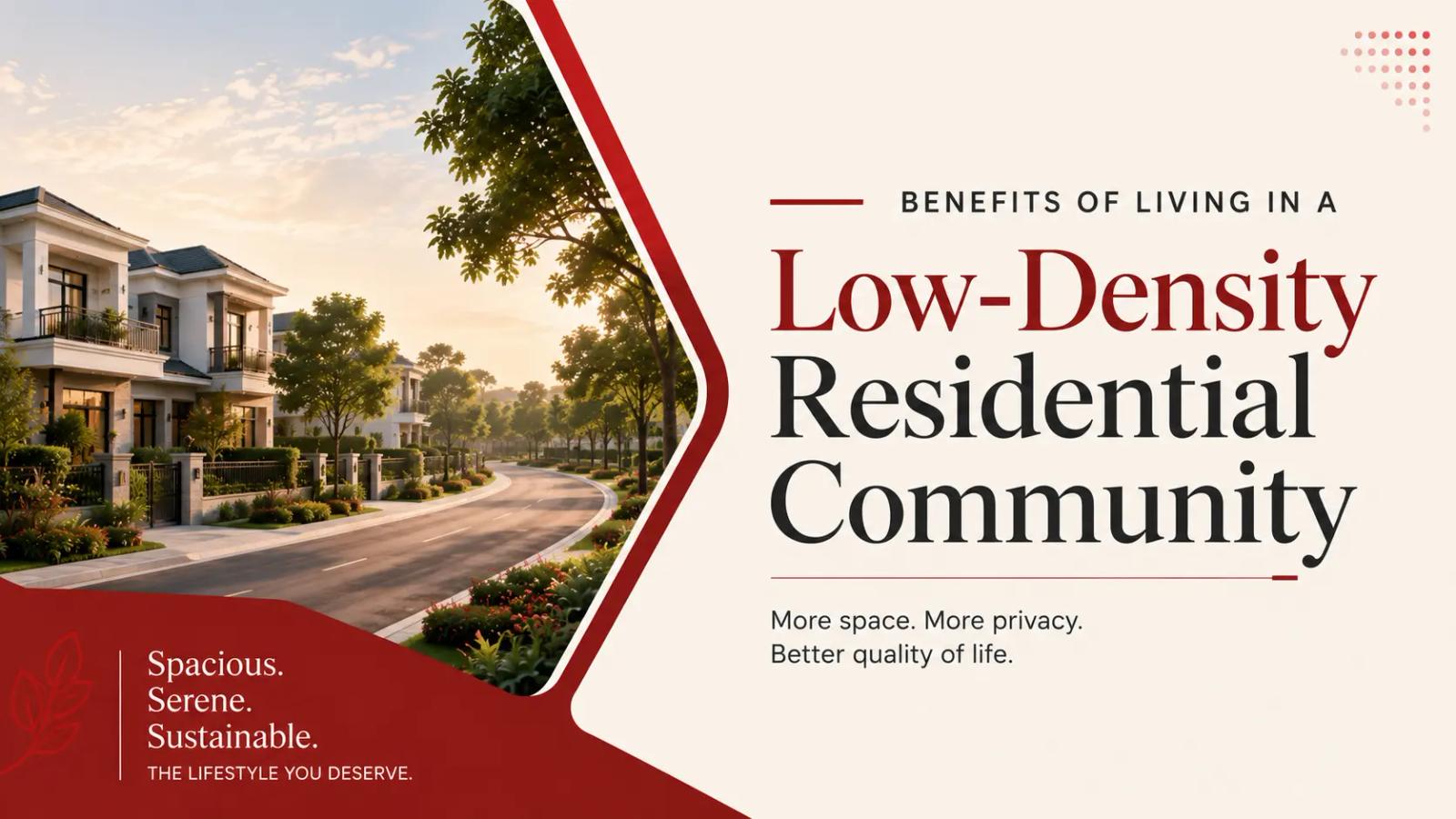

Finding the perfect home is no longer just about location or amenities. Today's homebuyers are equally focused on quality of life, privacy, and overall well-being. This is why low-density residential communities are becoming increasingly popular among families, working professionals, and long-term investors. Unlike crowded apartment complexes, these thoughtfully planned developments offer fewer homes spread across larger spaces, creating a peaceful and comfortable living environment.
A low-density residential community combines modern infrastructure with open spaces, making it an excellent choice for people seeking a balanced lifestyle without compromising on convenience.
Why Low-Density Residential Communities Are Becoming the Preferred Choice
As urban areas continue to grow, homebuyers are looking beyond just the size of a home. They want neighborhoods that offer privacy, greenery, and a healthier lifestyle. A low-density housing community provides exactly that by reducing overcrowding and creating a more organized living environment. With fewer residences occupying larger land parcels, these communities offer a better balance between modern amenities and open spaces, making everyday life more enjoyable.
Key Benefits of Living in a Low-Density Residential Community
1. More Privacy and Peaceful Living
One of the biggest advantages of living in a low-density housing community is the enhanced privacy it offers. With fewer residents sharing common spaces, homeowners experience less noise, fewer disturbances, and a calmer atmosphere.
This peaceful environment is especially valuable for families with children, senior citizens, and professionals working from home. It creates an ideal setting where residents can relax, focus, and enjoy everyday life without the stress often associated with densely populated developments.
2. Spacious Open Areas for Better Living
Modern homebuyers increasingly prioritize green spaces over crowded surroundings. A low-density residential project usually dedicates more land to landscaped gardens, walking paths, parks, and recreational zones instead of maximizing the number of residential units.
These open spaces encourage outdoor activities, morning walks, children's play, and community interaction while promoting healthier lifestyles. Access to nature also contributes positively to both physical and mental well-being.
3. Better Air Quality and Healthier Environment
Lower population density naturally results in reduced traffic, less pollution, and improved air circulation within the community. Residents benefit from cleaner surroundings, lower noise levels, and a more refreshing atmosphere.
For families looking for a healthier place to live, choosing a residential community with open spaces can significantly improve daily comfort and overall quality of life.
4. Less Congestion and Improved Convenience
High-density developments often experience crowded parking areas, busy elevators, and heavily used common facilities. In contrast, low-density gated communities provide smoother access to amenities, less waiting time, and more organized traffic movement.
Whether using the clubhouse, fitness center, children's play area, or internal roads, residents enjoy greater convenience because these facilities are shared by fewer households.
5. Stronger Community Connections
With fewer families living together, residents often develop stronger relationships with their neighbors. Community events become more personal, children interact in safer environments, and residents naturally build a greater sense of trust and belonging.
This creates a welcoming neighborhood where people feel connected while still enjoying personal privacy.
6. Better Property Value Over Time
From an investment perspective, low-density residential developments are increasingly preferred because of their limited supply and growing demand. As homebuyers continue seeking spacious, peaceful living environments, these communities often maintain strong market appeal.
Well-planned developments featuring quality infrastructure, green landscapes, and premium amenities are more likely to attract long-term buyers and tenants, supporting healthy property appreciation over time.
7. Enhanced Safety and Well-Planned Infrastructure
Many premium residential communities feature controlled entry points, well-designed internal roads, surveillance systems, and thoughtfully planned common areas. With fewer residents, security teams can monitor the community more effectively, while maintenance teams can ensure common facilities remain in excellent condition.
The result is a safer, cleaner, and better-managed environment for every resident.
Why a Well-Planned Community Makes All the Difference
A home should offer more than just a place to live; it should create an environment that supports comfort, wellness, and long-term happiness. Low-density residential communities are designed to provide that balance by combining spacious planning, modern amenities, and peaceful surroundings. They allow residents to enjoy a better quality of life while also making a smart long-term investment.
This approach to community living is reflected in the residential developments by Jayan Homes. With an emphasis on quality construction, spacious layouts, abundant green spaces, and thoughtfully planned neighborhoods, Jayan Homes creates homes that cater to the evolving expectations of modern families. By focusing on comfort, privacy, and sustainable living, they offer communities where residents can truly experience a balanced and fulfilling lifestyle.